



Coping with Tragic Events

After tragic events or natural disasters such as wildfires, people can feel stress, guilt or anger. It's important to remember there are ways to cope. You do not need to deal with difficult times alone.
Reading, listening, or watching news of distressing events can also make us feel anxious. During these times, it's important to keep track of mental well-being and not forget about self-care.
IN EMOTIONAL DISTRESS? CALL THE VCBH ACCESS/CRISIS LINE
VCBH Access/Crisis Line
1-866-998-2243
Free • Confidential • 24/7
If anyone is in immediate danger, call 911 and ask for a CIT officer
WAYS TO COPE – MENTAL WELLNESS
We each have different needs and different ways to cope. There are several things you can do to help care for yourself or a loved one.
- Take breaks for a day, a week or longer from news or social media. Notice how it makes you feel.
- Make time for activities that make you feel grounded, such as hobbies, art, games, sports, or time in nature
- Participate in meaningful social and cultural activities, including spiritual communities
- Try simple breathing exercises or meditating to feel calmer
- Take care of your physical health: eat healthy foods, exercise, and get enough sleep
- Seek support from mental health professional or talk to your healthcare provider
- Stay alert – don't overdo alcohol or use other drugs as a way to cope with stress.
Sharing reactions, thoughts, and emotions can be helpful for some people, but others may not want to share. Be sensitive to one another and speak in private, as not everyone will want to hear these conversations.
Learn strategies for reducing stress >
RESOURCES
Ventura County Recovers
Mountain Fire and disaster recovery information.
www.venturacountyrecovers.org
National Disaster Distress Helpline:
For anyone experiencing emotional distress related to disasters such as wildfires, earthquakes, or incident of mass violence.
Call 1-800-985-5990 or text TalkWithUs to 66746 to connect with a trained crisis counselor.
Available 24/7
www.samhsa.gov/find-help/disaster-distress-helpline
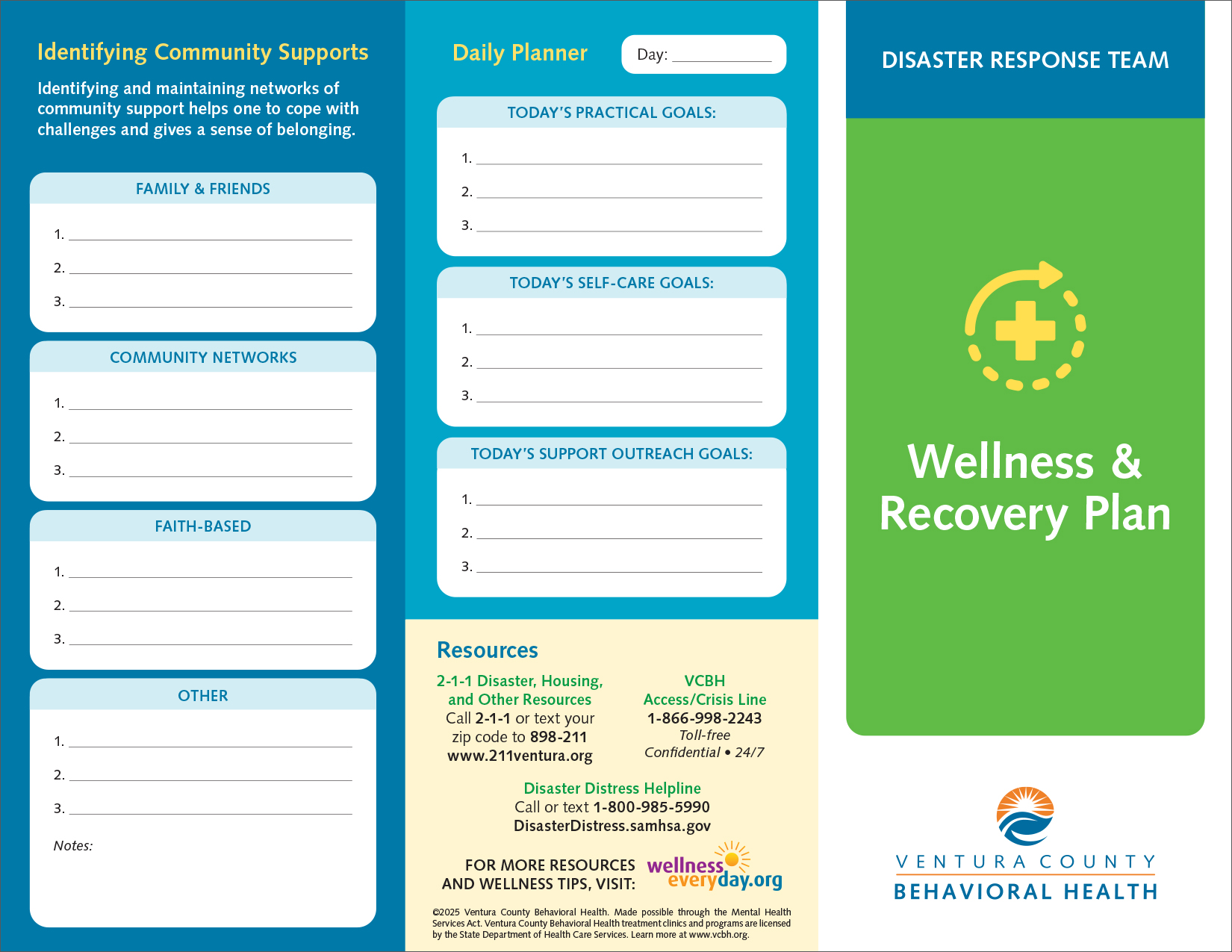
After a Disaster – Wellness and Recovery Plan

Be Red Cross Ready: Taking Care of Your Emotional Health after a Disaster
This fact sheet from the American Red Cross explains normal reactions to a disaster, what a survivor can do to cope with these emotions, and where to seek additional help if needed. www.redcross.org/images/MEDIA_CustomProductCatalog/m4240142_EmotionalHealth.pdf
2-1-1: For information about resources dial 211 or call 1-800-339-9597 or visit www.211ventura.org.
Coping with Stress from Natural Disasters
Natural disasters, like wildfires, can be emotionally challenging for you and your whole family. Taking care of yourself is the first step to supporting children and can create a sense of safety and comfort. Use these tips to help manage stress during difficult times.

HELPING CHILDREN
Sesame Street has videos and other resources for parents and children coping with traumatic experiences.
How to Talk to Kids About School Shootings
Strategies for dealing with anxiety – your kid's and your own.
https://childmind.org/article/anxiety-school-shooting/
"Help Kids Cope" App – This free mobile app provides information to help parents and other caregivers, teachers, counselors, and other prepare for and talk about disasters with kids. The app features tips and checklists to help with disaster preparation; information about how children typically respond to disasters; and links to kids’ books, activities, and other resources. Developed by the National Child Traumatic Stress Network and other organizations, the app runs on iPhone, iPad, and iPod Touch.
www.nctsn.org/content/help-kids-cope
Children with Intellectual and Developmental Disabilities Can Experience Traumatic Stress
A Fact Sheet for Parents and Caregivers
For more information and resources, see Helping Children Cope with Trauma.


211 Ventura County
Free service connecting people to health and human services in the community
Countywide – All Ages
CalHOPE Warm Line
For a crisis, call 911 or the VCBH Crisis Team at (866) 998-2243. Please note that information on WellnessEveryday.org should not be used as a substitute for professional healthcare. Always consult a healthcare professional before acting on any information found on WellnessEveryday.org.
Ventura County Behavioral Health treatment clinics and programs are licensed by the State Department of Health Care Services. Learn more at www.VCBH.org.
©Ventura County Behavioral Health | LEGAL
