



Eating Disorders
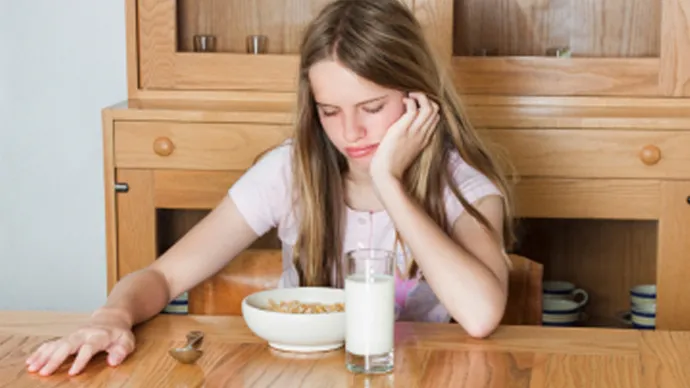
"I began sneaking food, trying to hide it from my mother."
"In middle school, I struggled a great deal with people making fun of me, calling me names."
"I was finally able to accept myself and to love myself for who I am."
"Living day to day knowing that your daughter can die is very numbing. There was no happiness there."
When eating behavior becomes extreme, either in under-eating or over-eating, it's an eating disorder. People with an eating disorder often have intense concerns about their body shape. Eating disorders are more than just a problem with food. Food is used to feel in control of other feelings that may seem overwhelming.
Three major types of eating disorders are:
ANOREXIA NERVOSA
A person with anorexia has an intense fear of gaining weight. Someone with anorexia thinks about food a lot and limits the food they eat, even though they may be too thin. Anorexia is more than just a problem with food. It's a way of using food or starving oneself to feel more in control of life and to ease tension, anger, and anxiety.
See Anorexia Nervosa Fact Sheet
BULIMIA NERVOSA
A person with bulimia eats a lot of food in a short amount of time (binging) and then tries to prevent weight gain by getting rid of the food (purging). People with bulimia feel they cannot control the amount of food eaten. They might exercise a lot, eat very little or not at all, or take pills to prevent weight gain.
See Bulimia Nervosa Fact Sheet
BINGE EATING DISORDER OR COMPULSIVE OVEREATING
People with binge eating disorder often eat an unusually large amount of food and feel out of control during the binges. People with binge eating disorder may:
- Eat more quickly than usual during binge episodes
- Eat until they are uncomfortably full
- Eat large amounts of food even when they are not really hungry
- Eat alone because they are embarrassed about the amount of food they eat
- Feel disgusted, depressed, or guilty after overeating
BODY IMAGE AND EATING DISORDERS
Body image is how a person sees oneself. It is often defined by the culture in which one lives. Parents can play an important role in the prevention of eating disorders. Healthy, balanced eating can be modeled in the home. Exercise can be done for fun and health, not weight loss. Read more about Parenting and Eating Disorder Prevention at Psych Central: Eating Disorders.
EATING DISORDERS AWARENESS
In the month of February, we highlight the importance of Eating Disorders Awareness. The National Eating Disorders Association (NEDA) helps to spread the awareness of eating disorders and the knowledge that eating disorders do not discriminate - ANYONE can be affected.
"The aim is to increase awareness of eating disorders and body image issues, while reducing the stigma surrounding eating disorders and improving access to treatment resources. Eating disorders are serious, life-threatening illnesses - not choices - and it's important to recognize the pressures, attitudes and behaviors that shape the disorder.”
Eating disorders are complex illnesses that can be life-threatening. Proper diagnosis and treatment of these conditions is important.
With support by family and treatment professionals, people with eating disorders can expect to see a significant decrease in their symptoms and can go on to live healthy lives in absence of serious medical complications.
RESOURCES ARE AVAILABLE IF YOU OR SOMEONE YOU MAY KNOW NEEDS HELP.
National Alliance on Mental Health (NAMI)
NAMI: Eating Disorders
Eating Disorders Fact Sheet (NAMI)
NAMI: Eating Disorders Fact Sheet
National Institute of Mental Health (NIMH)
NIMH: Eating Disorders
National Eating Disorders Association (NEDA)
National Eating Disorders Association
Women’s Health.gov (The Office on Women's Health, U.S. Department of Health and Human Services)
Womenshealth.gov/eating disorders
Psych Central
Psych Central: Eating Disorders
LOCAL RESOURCES
NAMI Ventura County: Support Groups Calendar
NAMI: Support Groups Calendar
Directory of Self-Help and Support Groups – West Ventura County
Directory of Self-Help and Support Groups – West Ventura County
Directory of Self-Help and Support Groups – East Ventura County
Directory of Self-Help and Support Groups – East Ventura County
Mental Health Recovery Classes
Recovery Innovations California: Classes, peer support specialists and resources for adults with both mental health and substance use challenges. Call (805) 981-5439 or visit:
Recovery Innovations Ventura
Recovery Innovations
Interface
Support and resources, including youth shelter and housing referrals
Countywide – Ages 12-21


City Impact
Counseling services and early intervention and prevention programs.
For mental health assessment and referral
Clinicas del Camino Real
Healthcare, including mental health services
Oxnard, Santa Paula, Simi Valley, Thousand Oaks, Ventura
Tri-County GLAD
California Lutheran University Community Counseling Centers
Jewish Family Services
211 Ventura County
Free service connecting people to health and human services in the community
Countywide – All Ages
For a crisis, call 911 or the VCBH Crisis Team at (866) 998-2243. Please note that information on WellnessEveryday.org should not be used as a substitute for professional healthcare. Always consult a healthcare professional before acting on any information found on WellnessEveryday.org.
Ventura County Behavioral Health treatment clinics and programs are licensed by the State Department of Health Care Services. Learn more at www.VCBH.org.
©Ventura County Behavioral Health | LEGAL
